


















Nori Rat LOX-1/OLR1 ELISA Kit
Price range: $508.00 through $916.00
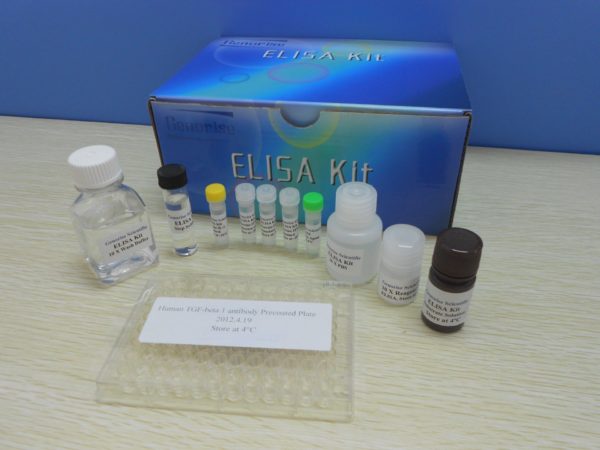
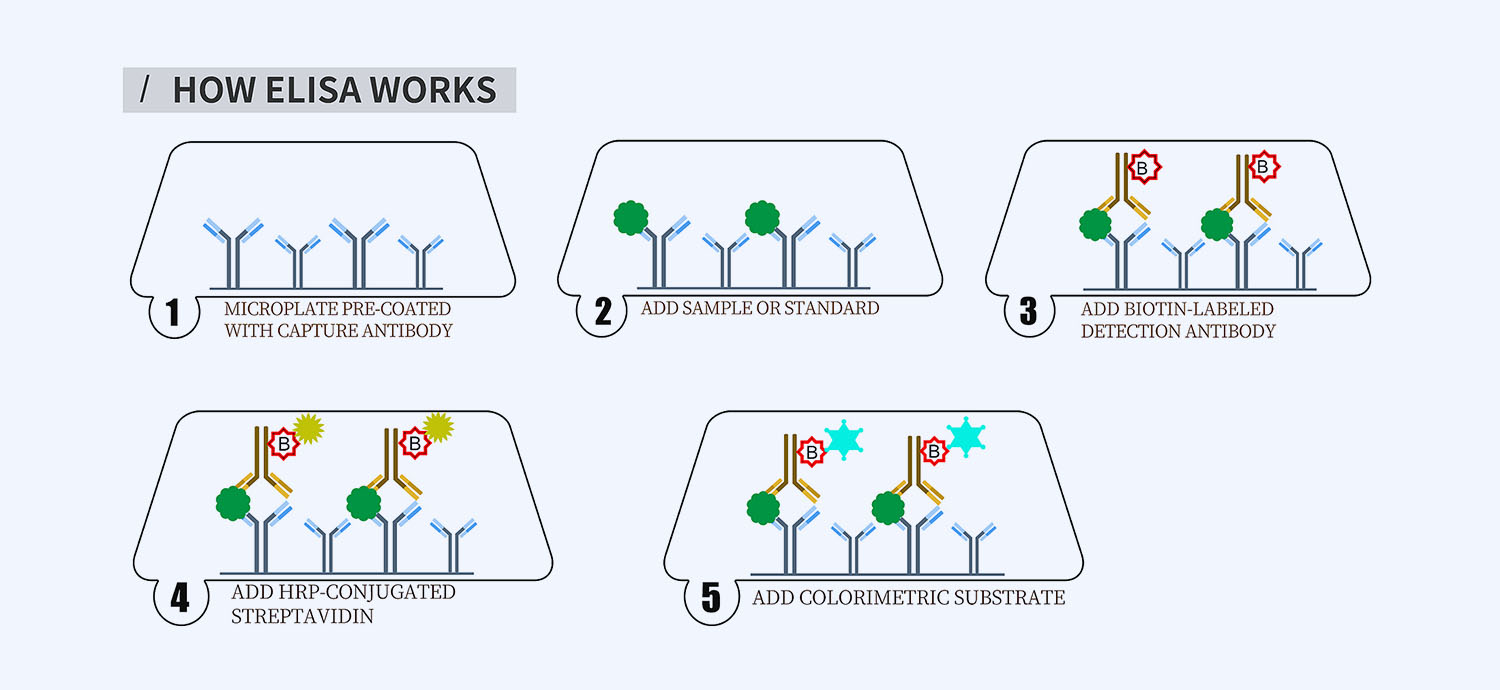
This ELISA kit is for quantification of LOX-1/OLR1 in rat. This is a quick ELISA assay that reduces time to 50% compared to the conventional method, and the entire assay only takes 3 hours. This assay employs the quantitative sandwich enzyme immunoassay technique and uses biotin-streptavidin chemistry to improve the performance of the assays. An antibody specific for OLR1 has been pre-coated onto a microplate. Standards and samples are pipetted into the wells and any OLR1 present is bound by the immobilized antibody. After washing away any unbound substances, a detection antibody specific for OLR1 is added to the wells. Following wash to remove any unbound antibody reagent, a detection reagent is added. After intensive wash a substrate solution is added to the wells and color develops in proportion to the amount of OLR1 bound in the initial step. The color development is stopped, and the intensity of the color is measured.
Alternative names for LOX-1: Oxidized low-density lipoprotein receptor 1 (Ox-LDL receptor 1), lectin-type oxidized LDL receptor 1, OLR1
This product is for laboratory research use only not for diagnostic and therapeutic purposes or any other purposes.
- Description
- How Elisa Works
- Documents
- Product Citation
- Reviews (0)
Description
Nori Rat LOX-1/OLR1 ELISA Kit Summary
Alternative names for LOX-1: Oxidized low-density lipoprotein receptor 1 (Ox-LDL receptor 1), lectin-type oxidized LDL receptor 1, OLR1
| Assay Type | Solid Phase Sandwich ELISA |
| Format | 96-well Microplate or 96-Well Strip Microplate |
| Method of Detection | Colorimetric |
| Number of Targets Detected | 1 |
| Target Antigen Accession Number | O70156 |
| Assay Length | 3 hours |
| Quantitative/Semiquantitative | Quantitative |
| Sample Type | Plasma, Serum, Cell Culture, Urine, Cell/Tissue Lysates, Synovial Fluid, BAL, |
| Recommended Sample Dilution (Plasma/Serum) | No dilution for sample <ULOQ; sufficient dilution for samples >ULOQ |
| Sensitivity | 6 pg/mL |
| Detection Range | 31.25-2000 pg/mL |
| Specificity | Rat LOX-1 |
| Cross-Reactivity | < 0.5% cross-reactivity observed with available related molecules, < 50% cross-species reactivity observed with species tested. |
| Interference | No significant interference observed with available related molecules |
| Storage/Stability | 4 ºC for up to 6 months |
| Usage | For Laboratory Research Use Only. Not for diagnostic or therapeutic use. |
| Additional Notes | The kit allows for use in multiple experiments. |
Standard Curve

Kit Components
1. Pre-coated 96-well Microplate
2. Biotinylated Detection Antibody
3. Streptavidin-HRP Conjugate
4. Lyophilized Standards
5. TMB One-Step Substrate
6. Stop Solution
7. 20 x PBS
8. Assay Buffer
Other Materials Required but not Provided:
1. Microplate Reader capable of measuring absorption at 450 nm
2. Log-log graph paper or computer and software for ELISA data analysis
3. Precision pipettes (1-1000 µl)
4. Multi-channel pipettes (300 µl)
5. Distilled or deionized water
Protocol Outline
1. Prepare all reagents, samples and standards as instructed in the datasheet.
2. Add 100 µl of Standard or samples to each well and incubate 1 h at RT.
3. Add 100 µl of Working Detection Antibody to each well and incubate 1 h at RT.
4. Add 100 µl of Working Streptavidin-HRP to each well and incubate 20 min at RT.
5. Add 100 µl of Substrate to each well and incubate 5-30 min at RT.
6. Add 50 µl of Stop Solution to each well and read at 450 nm immediately.
Background:
Oxidized low-density lipoprotein receptor 1 (Ox-LDL receptor 1) also known as lectin-type oxidized LDL receptor 1 (LOX-1) is a protein that is encoded by the OLR1 gene.[1] LOX-1 is a receptor protein which belongs to the C-type lectin superfamily. Its gene is regulated through the cyclic AMP signaling pathway. The protein binds, internalizes and degrades oxidized low-density lipoprotein. This protein may be involved in the regulation of Fas-induced apoptosis. This protein may play a role as a scavenger receptor. Mutations of the OLR1 gene have been associated with atherosclerosis, risk of myocardial infarction, and may modify the risk of Alzheimer’s disease. When applied to human macrophage-derived foam cells in vitro, the dietary supplement berberine inhibits the expression of the ORL1 gene in response to oxidized low-density lipoprotein cholesterol,[2] but this has not yet been demonstrated in a living animal or human.
References
- Li X, Bouzyk MM, Wang X (Nov 1998). “Assignment of the human oxidized low-density lipoprotein receptor gene (OLR1) to chromosome 12p13.1→p12.3, and identification of a polymorphic CA-repeat marker in the OLR1 gene”. Cytogenet Cell Genet. 82 (1–2): 34–6.
- Guan S, Wang B, Li W, Guan J, Fang X (2010). “Effects of berberine on expression of LOX-1 and SR-BI in human macrophage-derived foam cells induced by ox-LDL”. Am J Chin Med. 38 (6): 1161–9.
Product Citation
Be the first to review “Nori Rat LOX-1/OLR1 ELISA Kit”
You must be logged in to post a review.

Reviews
There are no reviews yet.