


















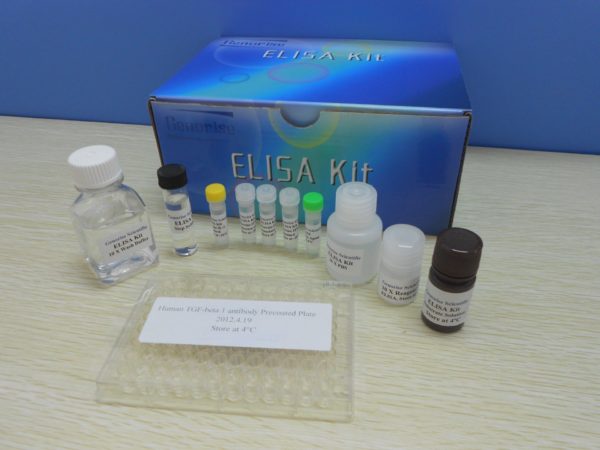
Nori Mouse ALT ELISA Kit
Price range: $508.00 through $916.00
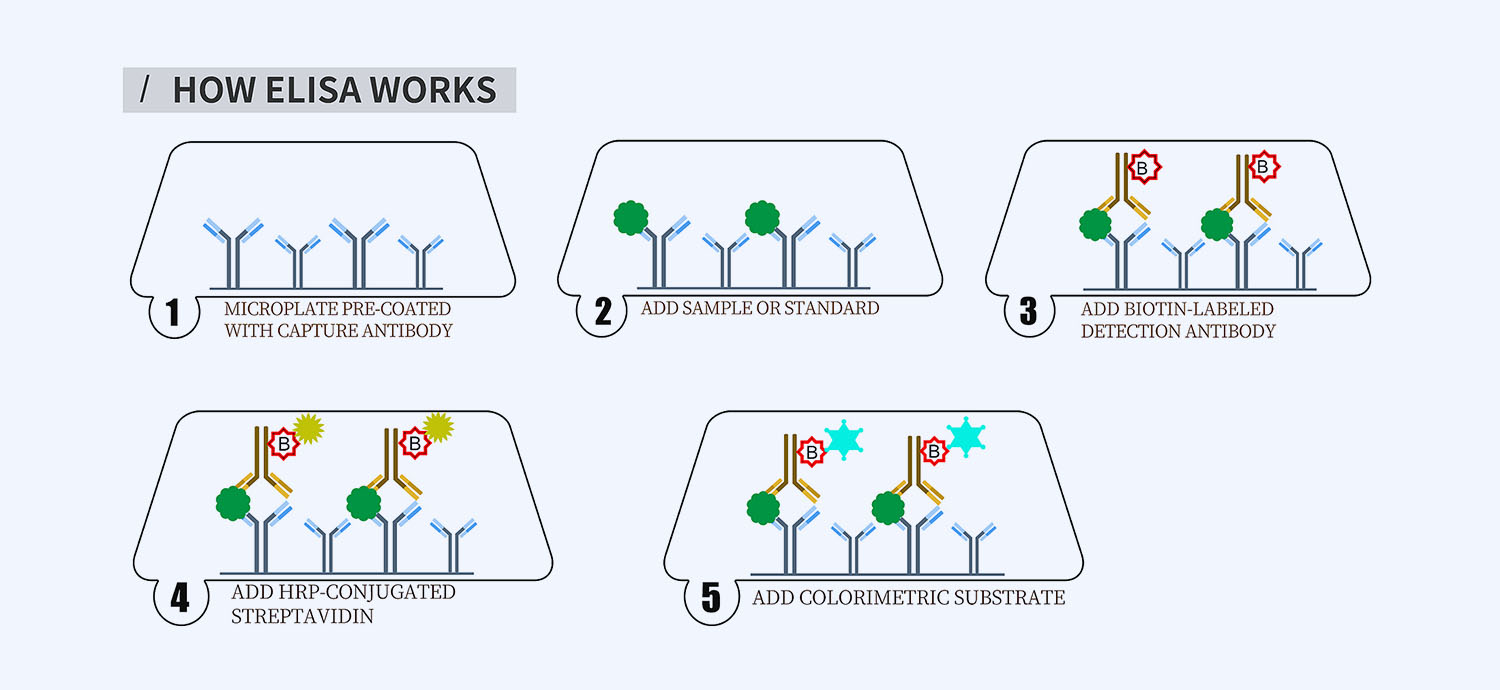
This ELISA kit is for quantification of ALT in mouse. This is a quick ELISA assay that reduces time to 50% compared to the conventional method, and the entire assay only takes 3 hours. This assay employs the quantitative sandwich enzyme immunoassay technique and uses biotin-streptavidin chemistry to improve the performance of the assays. An antibody specific for ALT has been pre-coated onto a microplate. Standards and samples are pipetted into the wells and any ALT present is bound by the immobilized antibody. After washing away any unbound substances, a detection antibody specific for ALT is added to the wells. Following wash to remove any unbound antibody reagent, a detection reagent is added. After intensive wash a substrate solution is added to the wells and color develops in proportion to the amount of ALT bound in the initial step. The color development is stopped, and the intensity of the color is measured.
Alternative names for ALT: Alanine transaminase, alanine aminotransferase, ALAT, GPT, GPT1, ALT1, Glutamate pyruvate transaminase 1, Glutamic–alanine transaminase 1, Glutamic–pyruvic transaminase 1
This product is for laboratory research use only not for diagnostic and therapeutic purposes or any other purposes.
- Description
- How Elisa Works
- Documents
- Product Citations
- Reviews (0)
Description
Nori Mouse ALT ELISA Kit Summary
Alternative names for ALT: Alanine transaminase, alanine aminotransferase, ALAT, GPT, GPT1, ALT1, Glutamate pyruvate transaminase 1, Glutamic–alanine transaminase 1, Glutamic–pyruvic transaminase 1
| Assay Type | Solid Phase Sandwich ELISA |
| Format | 96-well Microplate or 96-Well Strip Microplate |
| Method of Detection | Colorimetric |
| Number of Targets Detected | 1 |
| Target Antigen Accession Number | Q8QZR5 |
| Assay Length | 3 hours |
| Quantitative/Semiquantitative | Quantitative |
| Sample Type | Plasma, Serum, Cell Culture, Urine, Cell/Tissue Lysates, Synovial Fluid, BAL, |
| Recommended Sample Dilution (Plasma/Serum) | No dilution for sample <ULOQ; sufficient dilution for samples >ULOQ |
| Sensitivity | 3 pg/mL |
| Detection Range | 0.156-10 ng/mL |
| Specificity | Mouse ALT |
| Cross-Reactivity | < 0.5% cross-reactivity observed with available related molecules, < 50% cross-species reactivity observed with species tested. |
| Interference | No significant interference observed with available related molecules |
| Storage/Stability | 4 ºC for up to 6 months |
| Usage | For Laboratory Research Use Only. Not for diagnostic or therapeutic use. |
| Additional Notes | The kit allows for use in multiple experiments. |
Standard Curve

Kit Components
1. Pre-coated 96-well Microplate
2. Biotinylated Detection Antibody
3. Streptavidin-HRP Conjugate
4. Lyophilized Standards
5. TMB One-Step Substrate
6. Stop Solution
7. 20 x PBS
8. Assay Buffer
Other Materials Required but not Provided:
1. Microplate Reader capable of measuring absorption at 450 nm
2. Log-log graph paper or computer and software for ELISA data analysis
3. Precision pipettes (1-1000 µl)
4. Multi-channel pipettes (300 µl)
5. Distilled or deionized water
Protocol Outline
1. Prepare all reagents, samples and standards as instructed in the datasheet.
2. Add 100 µl of Standard or samples to each well and incubate 1 h at RT.
3. Add 100 µl of Working Detection Antibody to each well and incubate 1 h at RT.
4. Add 100 µl of Working Streptavidin-HRP to each well and incubate 20 min at RT.
5. Add 100 µl of Substrate to each well and incubate 5-30 min at RT.
6. Add 50 µl of Stop Solution to each well and read at 450 nm immediately.
Background:
Alanine transaminase (ALT) is a transaminase enzyme and is also called alanine aminotransferase (ALAT) and was formerly called serum glutamate-pyruvate transaminase (SGPT) or serum glutamic-pyruvic transaminase (SGPT).[1] ALT is found in plasma and in various body tissues but is most common in the liver. Serum ALT level, serum AST (aspartate transaminase) level, and their ratio (AST/ALT ratio) are commonly measured clinically as biomarkers for liver health. The tests are part of blood panels. ALT catalyzes the transfer of an amino group from L-alanine to α-ketoglutarate, the products of this reversible transamination reaction being pyruvate and L-glutamate. ALT (and all aminotransferases) require the coenzyme pyridoxal phosphate, which is converted into pyridoxamine in the first phase of the reaction, when an amino acid is converted into a keto acid. ALT is commonly measured clinically as part of liver function tests and is a component of the AST/ALT ratio.[2] Significantly elevated levels of ALT often suggest the existence of other medical problems such as viral hepatitis, diabetes, congestive heart failure, liver damage, bile duct problems, infectious mononucleosis, or myopathy, so ALT is commonly used as a way of screening for liver problems. [3] Elevated ALT may also be caused by dietary choline deficiency. However, elevated levels of ALT do not automatically mean that medical problems exist. Fluctuation of ALT levels is normal over the course of the day, and they can also increase in response to strenuous physical exercise. When elevated ALT levels are found in the blood, the possible underlying causes can be further narrowed down by measuring other enzymes. For example, elevated ALT levels due to hepatocyte damage can be distinguished from bile duct problems by measuring alkaline phosphatase. Also, myopathy-related elevations in ALT should be suspected when the aspartate transaminase (AST) is greater than ALT; the possibility of muscle disease causing elevations in liver tests can be further explored by measuring muscle enzymes, including creatine kinase. Many drugs may elevate ALT levels.[4]
References
- Karmen A, et al. (1955). The Journal of Clinical Investigation. 34 (1): 126–31.
- Ghouri N, et al. (2010). Hepatology. 52 (3): 1156–61.
- Dufour DR, et al. (2000). Clinical Chemistry. 46 (12): 2027–49.
- Watkins PB, et al. (2006). JAMA. 296 (1): 87–93.
Product Citations
Be the first to review “Nori Mouse ALT ELISA Kit”
You must be logged in to post a review.
Reviews
There are no reviews yet.