



















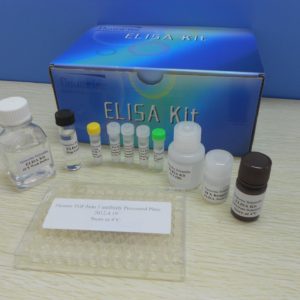
Nori Hamster TRAIL ELISA Kit
Price range: $508.00 through $916.00
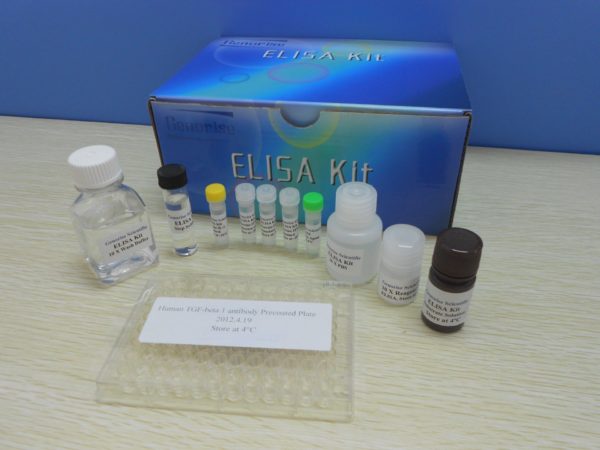
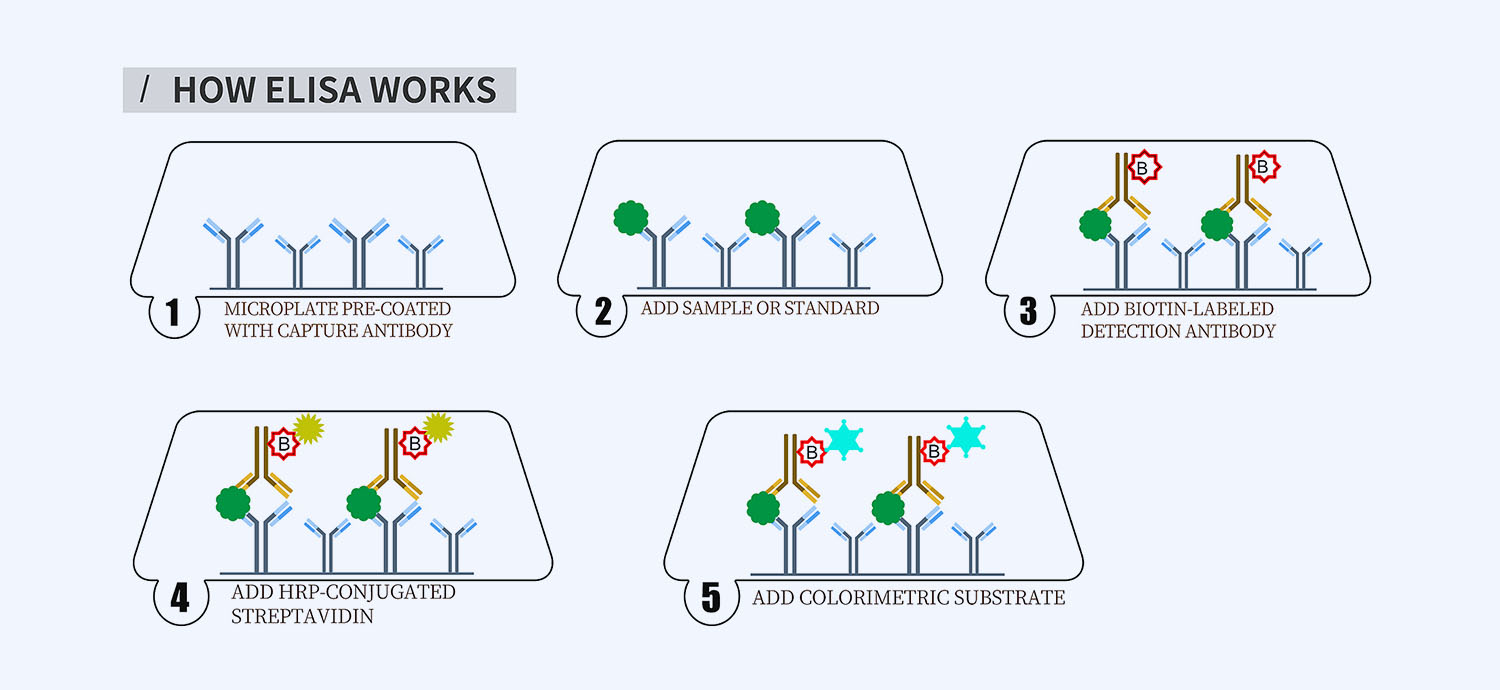
This ELISA kit is for quantification of TRAIL in hamster. This is a quick ELISA assay that reduces time to 50% compared to the conventional method, and the entire assay only takes 3 hours. This assay employs the quantitative sandwich enzyme immunoassay technique and uses biotin-streptavidin chemistry to improve the performance of the assays. An antibody specific for TRAIL has been pre-coated onto a microplate. Standards and samples are pipetted into the wells and any TRAIL present is bound by the immobilized antibody. After washing away any unbound substances, a detection antibody specific for TRAIL is added to the wells. Following wash to remove any unbound antibody reagent, a detection reagent is added. After intensive wash a substrate solution is added to the wells and color develops in proportion to the amount of TRAIL bound in the initial step. The color development is stopped, and the intensity of the color is measured.
Alternative names for TRAIL: TNF-related apoptosis-inducing ligand, CD253, TNFSF10
This product is for laboratory research use only not for diagnostic and therapeutic purposes or any other purposes.
- Description
- How Elisa Works
- Documents
- Product Citations (0)
- Reviews (0)
Description
Nori Hamster TRAIL ELISA Kit Summary
Alternative names for TRAIL: TNF-related apoptosis-inducing ligand, CD253, TNFSF10
Alternative names for hamster: Golden hamster, Syrian hamster, Chinese hamster, long-tailed dwarf hamster
| Assay Type | Solid Phase Sandwich ELISA |
| Format | 96-well Microplate or 96-Well Strip Microplate |
| Method of Detection | Colorimetric |
| Number of Targets Detected | 1 |
| Target Antigen Accession Number | K7XCC1 |
| Assay Length | 3 hours |
| Quantitative/Semiquantitative | Quantitative |
| Sample Type | Plasma, Serum, Cell Culture, Urine, Cell/Tissue Lysates, Synovial Fluid, BAL, |
| Recommended Sample Dilution (Plasma/Serum) | No dilution for sample <ULOQ; sufficient dilution for samples >ULOQ |
| Sensitivity | 6 pg/mL |
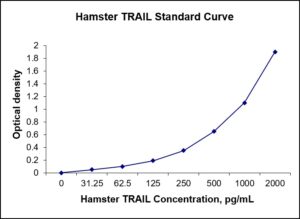
| Detection Range | 31.25-2000 pg/mL |
| Specificity | Hamster TRAIL |
| Cross-Reactivity | < 0.5% cross-reactivity observed with available related molecules, < 50% cross-species reactivity observed with species tested. |
| Interference | No significant interference observed with available related molecules |
| Storage/Stability | 4 ºC for up to 6 months |
| Usage | For Laboratory Research Use Only. Not for diagnostic or therapeutic use. |
| Additional Notes | The kit allows for use in multiple experiments. |
Standard Curve
Kit Components
1. Pre-coated 96-well Microplate
2. Biotinylated Detection Antibody
3. Streptavidin-HRP Conjugate
4. Lyophilized Standards
5. TMB One-Step Substrate
6. Stop Solution
7. 20 x PBS
8. Assay Buffer
Other Materials Required but not Provided:
1. Microplate Reader capable of measuring absorption at 450 nm
2. Log-log graph paper or computer and software for ELISA data analysis
3. Precision pipettes (1-1000 µl)
4. Multi-channel pipettes (300 µl)
5. Distilled or deionized water
Protocol Outline
1. Prepare all reagents, samples and standards as instructed in the datasheet.
2. Add 100 µl of Standard or samples to each well and incubate 1 h at RT.
3. Add 100 µl of Working Detection Antibody to each well and incubate 1 h at RT.
4. Add 100 µl of Working Streptavidin-HRP to each well and incubate 20 min at RT.
5. Add 100 µl of Substrate to each well and incubate 5-30 min at RT.
6. Add 50 µl of Stop Solution to each well and read at 450 nm immediately.
Background:
TNF-related apoptosis-inducing ligand (TRAIL), is a protein functioning as a ligand that induces the process of cell death called apoptosis.[1][2] TRAIL has also been designated CD253 and TNFSF10.
TRAIL is a cytokine that is produced and secreted by most normal tissue cells. It causes apoptosis primarily in tumor cells, by binding to certain death receptors. TRAIL is implicated as a pathogenic or protective factor in various pulmonary diseases, particularly pulmonary arterial hypertension.[3] TRAIL binds to the death receptors DR4 (TRAIL-RI) and DR5 (TRAIL-RII). The process of apoptosis is caspase-8-dependent. Caspase-8 activates downstream effector caspases including procaspase-3, -6, and -7, leading to activation of specific kinases.[4] TRAIL also binds the receptors DcR1 and DcR2, which do not contain a cytoplasmic domain (DcR1) or contain a truncated death domain (DcR2). DcR1 functions as a TRAIL-neutralizing decoy-receptor. The cytoplasmic domain of DcR2 is functional and activates NFkappaB. In cells expressing DcR2, TRAIL binding therefore activates NFkappaB, leading to transcription of genes known to antagonize the death signaling pathway and/or to promote inflammation. Application of engineered ligands that have variable affinity for different death (DR4 and DR5) and decoy receptors (DCR1 and DCR2) may allow selective targeting of cancer cells by controlling activation of Type 1/Type 2 pathways of cell death and single cell fluctuations. TRAIL mimics bind to DR4/DR5 on cancer cells and induce cell death via both apoptosis and necrosis, which makes them a potential candidate for anticancer drug development.[5]
References
- Wiley SR, et al. (1995). Immunity. 3 (6): 673–82.
- Pitti RM, et al. (1996). The Journal of Biological Chemistry. 271 (22): 12687–90.
- Braithwaite AT, et al. (2018). Frontiers in Medicine. 5: 212.
- Song JJ, Lee YJ (2008). Cellular Signaling. 20 (5): 892–906.
- Masum AA, et al. (2018). Bioorganic & Medicinal Chemistry. 26 (17): 4804–4816.
Product Citations
Be the first to review “Nori Hamster TRAIL ELISA Kit”
You must be logged in to post a review.
Reviews
There are no reviews yet.