



















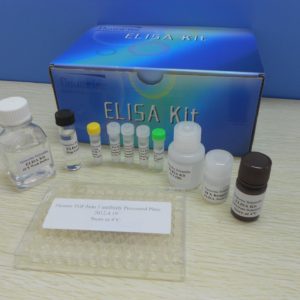
Nori Canine Angiotensin II ELISA Kit
Price range: $508.00 through $916.00
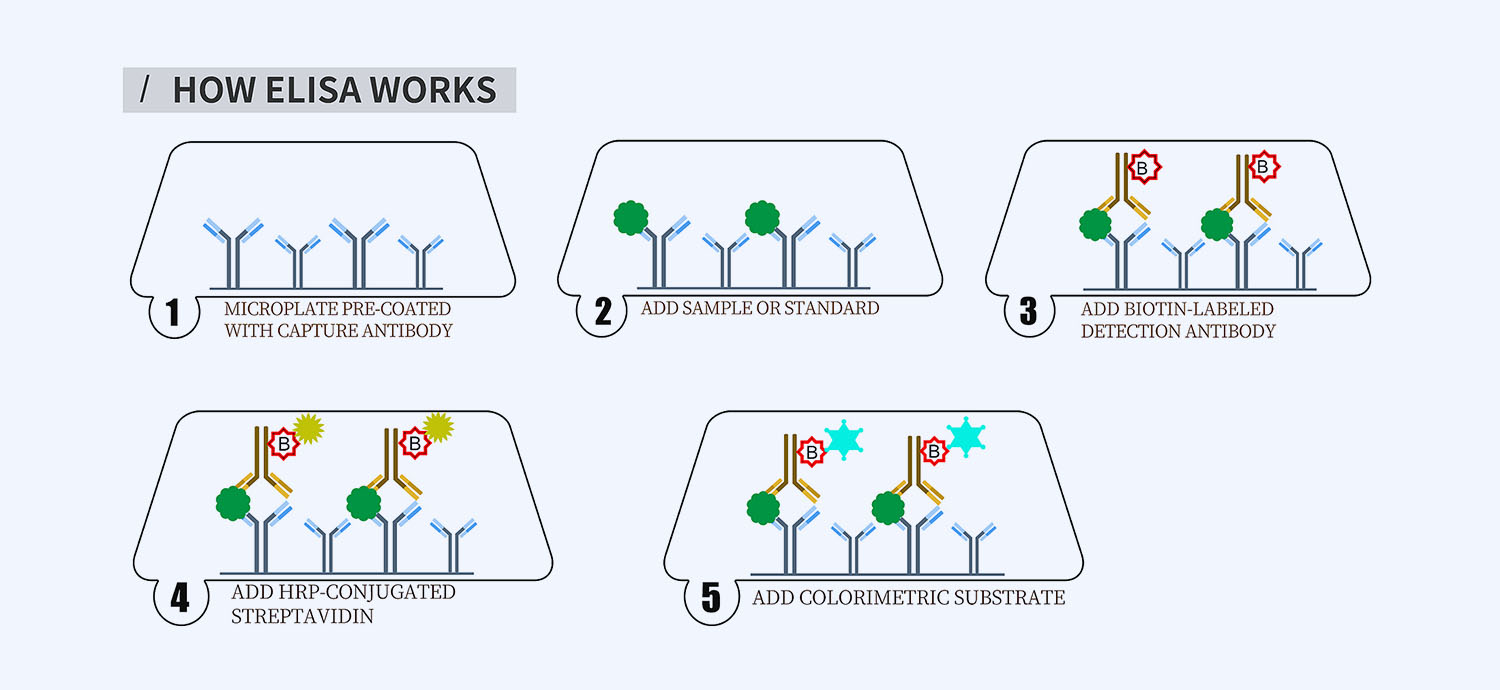
This ELISA kit is for quantification of Angiotensin II in canine. This is a quick ELISA assay that reduces time to 50% compared to the conventional method, and the entire assay only takes 3 hours. This assay employs the quantitative sandwich enzyme immunoassay technique and uses biotin-streptavidin chemistry to improve the performance of the assays. An antibody specific for AII has been pre-coated onto a microplate. Standards and samples are pipetted into the wells and any AII present is bound by the immobilized antibody. After washing away any unbound substances, a detection antibody specific for AII is added to the wells. Following wash to remove any unbound antibody reagent, a detection reagent is added. After intensive wash a substrate solution is added to the wells and color develops in proportion to the amount of AII bound in the initial step. The color development is stopped, and the intensity of the color is measured.
Alternative names for angiotensin II: AII
This product is for laboratory research use only not for diagnostic and therapeutic purposes or any other purposes.
- Description
- How Elisa Works
- Documents
- Product Citations
- Reviews (0)
Description
Nori Canine Angiotensin II ELISA Kit Summary
Alternative names for angiotensin II: AII,
Alternative names for canine: Dog
| Assay Type | Solid Phase Sandwich ELISA |
| Format | 96-well Microplate or 96-Well Strip Microplate |
| Method of Detection | Colorimetric |
| Number of Targets Detected | 1 |
| Target Antigen Accession Number | na |
| Assay Length | 3 hours |
| Quantitative/Semiquantitative | Quantitative |
| Sample Type | Plasma, Serum, Cell Culture, Urine, Cell/Tissue Lysates, Synovial Fluid, BAL, |
| Recommended Sample Dilution (Plasma/Serum) | No dilution for sample <ULOQ; sufficient dilution for samples >ULOQ |
| Sensitivity | 6 pg/mL |
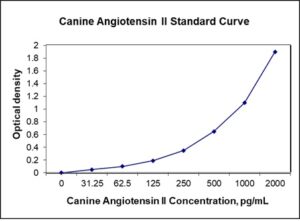
| Detection Range | 31.25-2000 pg/mL |
| Specificity | Canine Angiotensin II |
| Cross-Reactivity | < 0.5% cross-reactivity observed with available related molecules, < 50% cross-species reactivity observed with species tested. |
| Interference | No significant interference observed with available related molecules |
| Storage/Stability | 4 ºC for up to 6 months |
| Usage | For Laboratory Research Use Only. Not for diagnostic or therapeutic use. |
| Additional Notes | The kit allows for use in multiple experiments. |
Standard Curve
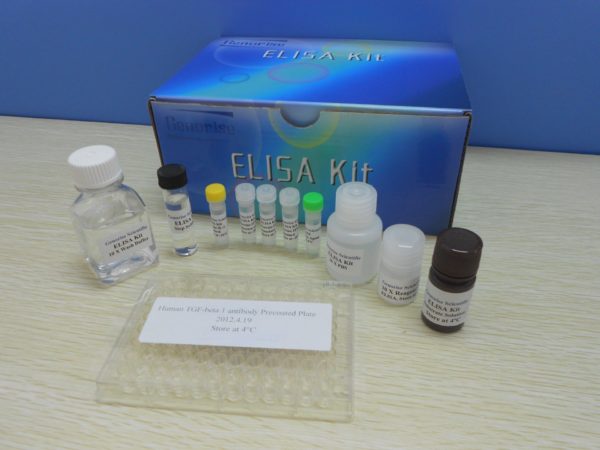
Kit Components
1. Pre-coated 96-well Microplate
2. Biotinylated Detection Antibody
3. Streptavidin-HRP Conjugate
4. Lyophilized Standards
5. TMB One-Step Substrate
6. Stop Solution
7. 20 x PBS
8. Assay Buffer
Other Materials Required but not Provided:
1. Microplate Reader capable of measuring absorption at 450 nm
2. Log-log graph paper or computer and software for ELISA data analysis
3. Precision pipettes (1-1000 µl)
4. Multi-channel pipettes (300 µl)
5. Distilled or deionized water
Protocol Outline
1. Prepare all reagents, samples and standards as instructed in the datasheet.
2. Add 100 µl of Standard or samples to each well and incubate 1 h at RT.
3. Add 100 µl of Working Detection Antibody to each well and incubate 1 h at RT.
4. Add 100 µl of Working Streptavidin-HRP to each well and incubate 20 min at RT.
5. Add 100 µl of Substrate to each well and incubate 5-30 min at RT.
6. Add 50 µl of Stop Solution to each well and read at 450 nm immediately.
Background:
Angiotensin is a peptide hormone that causes vasoconstriction and an increase in blood pressure. It is part of the renin–angiotensin system, which regulates blood pressure. Angiotensin also stimulates the release of aldosterone from the adrenal cortex to promote sodium retention by the kidneys. Angiotensin I is converted to angiotensin II (AII) through removal of two C-terminal residues by angiotensin-converting enzyme (ACE), primarily through ACE within the lung (but also present in endothelial cells, kidney epithelial cells, and the brain). Angiotensin II acts on the CNS to increase vasopressin production, and also acts on venous and arterial smooth muscle to cause vasoconstriction. Angiotensin II also increases aldosterone secretion, therefore, it acts as an endocrine, autocrine/paracrine, and intracrine hormone. Angiotensin II increases blood pressure by stimulating the Gq protein in vascular smooth muscle cells. In addition, angiotensin II acts at the Na+/H+ exchanger in the proximal tubules of the kidney to stimulate Na reabsorption and H+ excretion which is coupled to bicarbonate reabsorption. Angiotensin II is degraded to angiotensin III by angiotensinases located in red blood cells and the vascular beds of most tissues. It has a half-life in circulation of around 30 seconds, whereas, in tissue, it may be 15–30 minutes. Angiotensin II results in increased inotropy, chronotropy, catecholamine (norepinephrine) release, catecholamine sensitivity, aldosterone levels, vasopressin levels, and cardiac remodeling and vasoconstriction through AT1 receptors on peripheral vessels. Angiotensin II has prothrombotic potential through adhesion and aggregation of platelets and stimulation of PAI-1 and PAI-2.[1] Angiotensin II is the most important Gq stimulator of the heart during hypertrophy, compared to endothelin-1 and α1 adrenoreceptors. Angiotensin II increases thirst sensation through the area postrema and subfornical organ of the brain,[2] decreases the response of the baroreceptor reflex, increases the desire for salt, increases secretion of ADH from the posterior pituitary, and increases secretion of ACTH from the anterior pituitary.[2] It also potentiates the release of norepinephrine by direct action on postganglionic sympathetic fibers. Angiotensin II acts on the adrenal cortex, causing it to release aldosterone, a hormone that causes the kidneys to retain sodium and lose potassium. Elevated plasma angiotensin II levels are responsible for the elevated aldosterone levels present during the luteal phase of the menstrual cycle. Angiotensin II has a direct effect on the proximal tubules to increase Na+ reabsorption. Angiotensin II causes the local release of prostaglandins, which, in turn, antagonize renal vasoconstriction.
References
- Skurk T, et al. (2001). Hypertension. 37 (5): 1336–40.
- Shaver SW, et al. (1989). Brain Research. 505 (2): 316–20.
Product Citations
Be the first to review “Nori Canine Angiotensin II ELISA Kit”
You must be logged in to post a review.
Reviews
There are no reviews yet.