




















Nori Mouse tPA ELISA Kit
Price range: $508.00 through $916.00
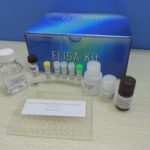
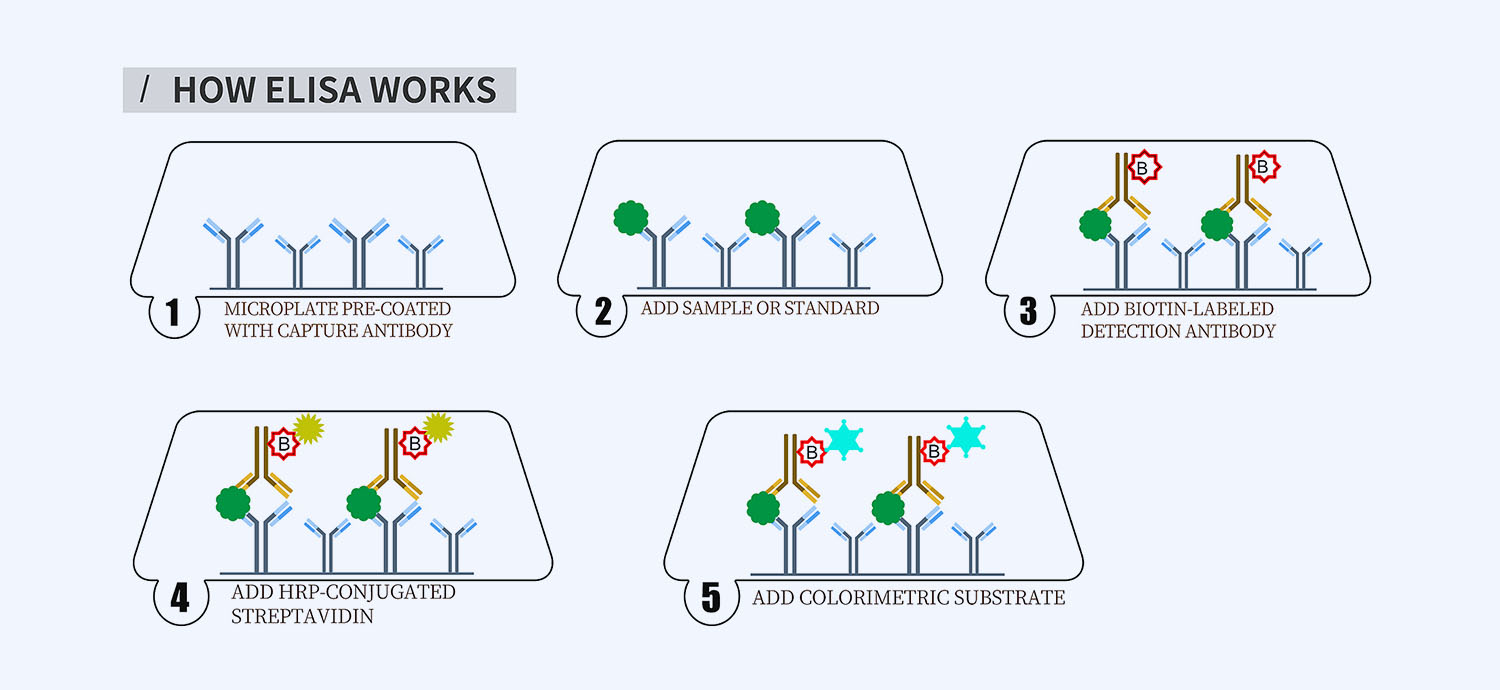
This ELISA kit is for quantification of tPA in mouse. This is a quick ELISA assay that reduces time to 50% compared to the conventional method, and the entire assay only takes 3 hours. This assay employs the quantitative sandwich enzyme immunoassay technique and uses biotin-streptavidin chemistry to improve the performance of the assays. An antibody specific for tPA has been pre-coated onto a microplate. Standards and samples are pipetted into the wells and any tPA present is bound by the immobilized antibody. After washing away any unbound substances, a detection antibody specific for tPA is added to the wells. Following wash to remove any unbound antibody reagent, a detection reagent is added. After intensive wash a substrate solution is added to the wells and color develops in proportion to the amount of tPA bound in the initial step. The color development is stopped, and the intensity of the color is measured.
Alternative names for tPA: Tissue plasminogen activator, PLAT
This product is for laboratory research use only not for diagnostic and therapeutic purposes or any other purposes.
- Description
- How Elisa Works
- Documents
- Product Citations (0)
- Reviews (0)
Description
Nori Mouse tPA ELISA Kit Summary
Alternative names for tPA: Tissue plasminogen activator, PLAT
| Assay Type | Solid Phase Sandwich ELISA |
| Format | 96-well Microplate or 96-Well Strip Microplate |
| Method of Detection | Colorimetric |
| Number of Targets Detected | 1 |
| Target Antigen Accession Number | P11214 |
| Assay Length | 3 hours |
| Quantitative/Semiquantitative | Quantitative |
| Sample Type | Plasma, Serum, Cell Culture, Urine, Cell/Tissue Lysates, Synovial Fluid, BAL, |
| Recommended Sample Dilution (Plasma/Serum) | No dilution for sample <ULOQ; sufficient dilution for samples >ULOQ |
| Sensitivity | 12 pg/mL |
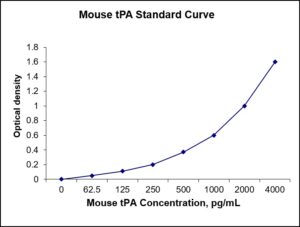
| Detection Range | 62.5-4000 pg/mL |
| Specificity | Mouse tPA |
| Cross-Reactivity | < 0.5% cross-reactivity observed with available related molecules, < 50% cross-species reactivity observed with species tested. |
| Interference | No significant interference observed with available related molecules |
| Storage/Stability | 4 ºC for up to 6 months |
| Usage | For Laboratory Research Use Only. Not for diagnostic or therapeutic use. |
| Additional Notes | The kit allows for use in multiple experiments. |
Standard Curve
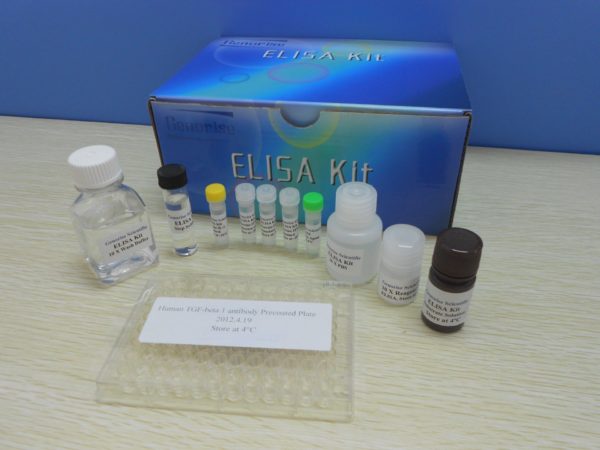
Kit Components
1. Pre-coated 96-well Microplate
2. Biotinylated Detection Antibody
3. Streptavidin-HRP Conjugate
4. Lyophilized Standards
5. TMB One-Step Substrate
6. Stop Solution
7. 20 x PBS
8. Assay Buffer
Other Materials Required but not Provided:
1. Microplate Reader capable of measuring absorption at 450 nm
2. Log-log graph paper or computer and software for ELISA data analysis
3. Precision pipettes (1-1000 µl)
4. Multi-channel pipettes (300 µl)
5. Distilled or deionized water
Protocol Outline
1. Prepare all reagents, samples and standards as instructed in the datasheet.
2. Add 100 µl of Standard or samples to each well and incubate 1 h at RT.
3. Add 100 µl of Working Detection Antibody to each well and incubate 1 h at RT.
4. Add 100 µl of Working Streptavidin-HRP to each well and incubate 20 min at RT.
5. Add 100 µl of Substrate to each well and incubate 5-30 min at RT.
6. Add 50 µl of Stop Solution to each well and read at 450 nm immediately.
Background:
Tissue plasminogen activator (tPA or PLAT) is a protein involved in the breakdown of blood clots and encoded by PLAT gene.[1] It is a serine protease (EC 3.4.21.68) found on endothelial cells, the cells that line the blood vessels. As an enzyme, it catalyzes the conversion of plasminogen to plasmin, the major enzyme responsible for clot breakdown. tPA cleaves the zymogen plasminogen at its Arg561 – Val562 peptide bond, into the serine protease plasmin. tPA can go one of three ways in the body; (1) uptaken by the liver and cleared through receptors therein, (2) inhibited by a plasminogen activator inhibitor (PAI) and subsequently cleared from the liver, or (3) through the activation of plasminogen to plasmin for degradation to result in fibrin degradation product (FDP).[2] tPA additionally can be bound by a plasminogen activator inhibitor (PAI), resulting in inactivation of its activity, and following clearing from the body by the liver. Lastly, tPA can bind plasminogen, cleaving off the bound plasmin from it. tPA is known to participate in some forms of synaptic plasticity, in particular long-term depression and consequently mediate some aspects of memory.[3] Increased enzymatic activity causes hyperfibrinolysis, which manifests as excessive bleeding and/or an increase of the vascular permeability.[4] Decreased activity leads to hypofibrinolysis, which can result in thrombosis or embolism. In ischemic stroke patients, decreased tPA activity was reported to be associated with an increase in plasma P-selectin concentration.[5]
References
- Pennica D, et al. (1983). Nature. 301(5897): 214–21.
- Gravanis I, Tsirka SE (2008). Expert Opinion on Therapeutic Targets. 12(2): 159–70.
- Bernardi G, et al. (2000). The European Journal of Neuroscience. 12(3): 1002–1012.
- Marcos-Contreras OA, et al. (2016). Blood. 128(20): 2423–2434.
- Wang J, Li J, Liu Q (2005). Neuroscience Letters. 384(3): 305–9.
Product Citations
Be the first to review “Nori Mouse tPA ELISA Kit”
You must be logged in to post a review.

Reviews
There are no reviews yet.