






















Recombinant Canine IL-3 Protein
Price range: $99.00 through $456.00
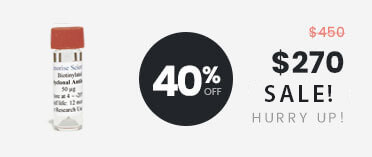
The recombinant canine IL-3 protein is derived from in vitro expression of canine IL-3 gene in E. coli and purified using his-tag affinity column and can be used in multiple applications such as cell culture, ELISA and western blot.
Alternative names for IL-3: Interleukin 3, IL3, MCGF
This product is for Laboratory Research Use Only not for diagnostic and therapeutic purposes or any other purposes.
- Description
- Documents
- Product Citations
- Reviews (0)
Description
Genorise Recombinant Canine IL-3 Protein Summary
Alternative names for IL-3: Interleukin 3, IL3, MCGF
Alternative name for canine: Dog
Product Specifications
| Purity | > 95%, by SDSPAGE under reducing conditions and visualized by silver stain. |
| Endotoxin Level | na |
| Activity | na |
| Source | E. coli derived canine IL-3. |
| Accession # | Q9BDX4 |
| N-Terminal Sequence Analysis | Ala |
| Amino Acid Sequence | Ala21-Pro143 |
| Predicted Molecular Mass | 14 kDa |
| SDS-PAGE | 14 kDa, reducing conditions |
Background:
Interleukin 3 (IL-3) is a protein that is encoded by the IL3 gene[1] and it is called colony-stimulating factor; mast cell growth factor, MULTI-CSF, MCGF; MGC79398, MGC79399. The protein contains 152 amino acids and its molecular weight is 17 kDa and the naturally occurring IL-3 is glycosylated. IL-3 is produced as a monomer by activated T cells, monocytes/macrophages and stroma cells. The major function of IL-3 cytokine is to regulate blood-cell production. It induces proliferation and differentiation of early pluripotent stem cells and committed progenitors.[2] Interleukin 3 acts by binding to the interleukin-3 receptor.[3] IL-3/Receptor complex induces JAK2/STAT5 cell signalisation pathway. It can stimulate transcription factor c‑myc (activation of gene expression) and Ras pathway (suppression of apoptosis). Interleukin 3 has been shown to interact with IL3RA.[4] Interleukin 3 stimulates the differentiation of multipotent hematopoietic stem cells into myeloid progenitor cells or, with the addition of IL-7, into lymphoid progenitor cells. In addition, IL-3 stimulates proliferation of all cells in the myeloid lineage (granulocytes, monocytes, and dendritic cells), in conjunction with other cytokines, e.g., Erythropoietin (EPO), Granulocyte macrophage colony-stimulating factor (GM-CSF), and IL-6. It is secreted by basophils and activated T cells to support growth and differentiation of T cells from the bone marrow in an immune response.
References
- Yang YC, et al. (1986). Cell. 47 (1): 3–10. doi:1016/0092-8674(86)90360-0. PMID3489530.
- Aglietta, M.; et al. (1996). Stem Cells. 11 (S2): 83–87.
- Tabira T, et al. (1998). Ann. N. Y. Acad. Sci. 840 (1): 107–16.
- Stomski FC, et al. (1996). Mol. Cell. Biol. 16 (6): 3035–46.
Product Citations
Be the first to review “Recombinant Canine IL-3 Protein”
You must be logged in to post a review.
Reviews
There are no reviews yet.