



















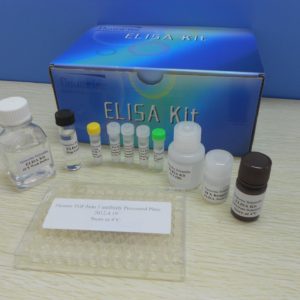
Nori Monkey IDO-1 ELISA Kit
Price range: $508.00 through $916.00
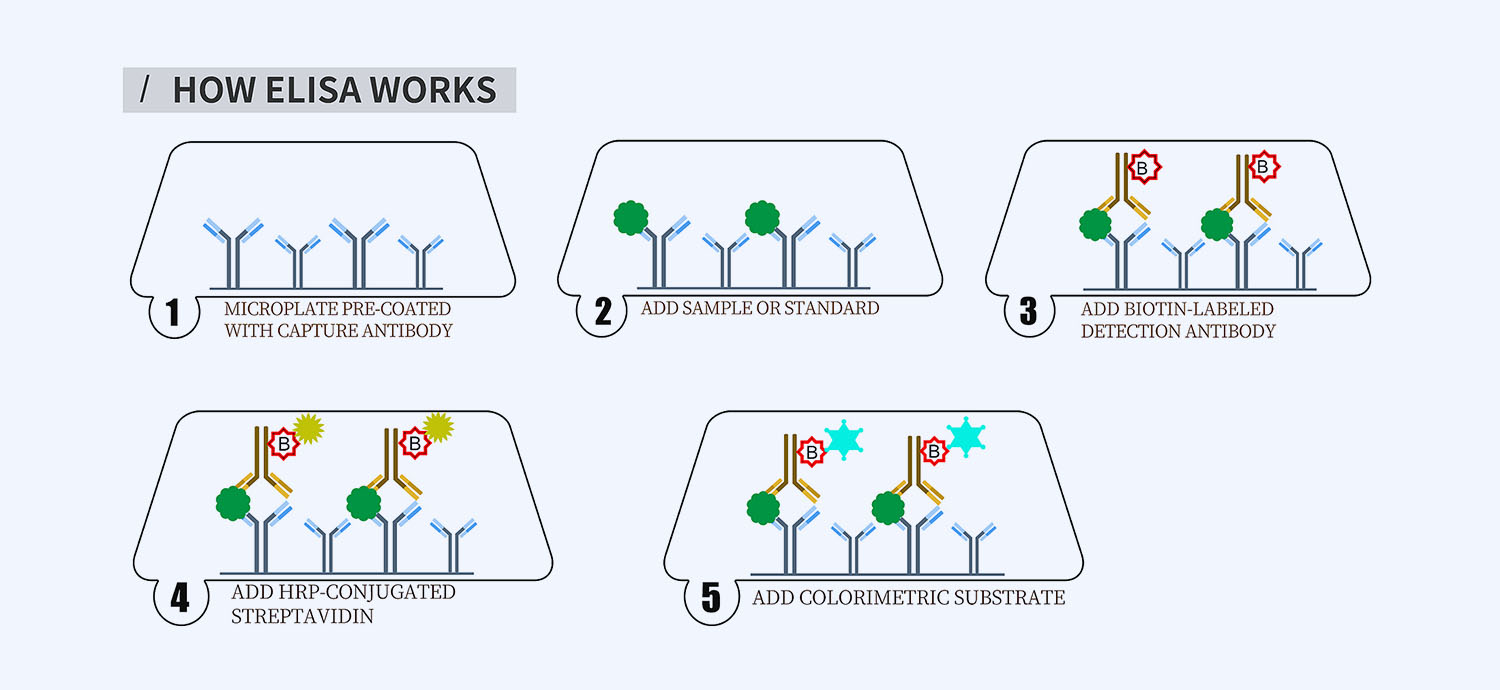
This ELISA kit is for quantification of IDO-1 in monkey. This is a quick ELISA assay that reduces time to 50% compared to the conventional method, and the entire assay only takes 3 hours. This assay employs the quantitative sandwich enzyme immunoassay technique and uses biotin-streptavidin chemistry to improve the performance of the assays. An antibody specific for IDO has been pre-coated onto a microplate. Standards and samples are pipetted into the wells and any IDO present is bound by the immobilized antibody. After washing away any unbound substances, a detection antibody specific for IDO is added to the wells. Following wash to remove any unbound antibody reagent, a detection reagent is added. After intensive wash a substrate solution is added to the wells and color develops in proportion to the amount of IDO bound in the initial step. The color development is stopped, and the intensity of the color is measured.
Alternative names for IDO-1: Indoleamine-pyrrole 2,3-dioxygenase, IDO1, Indoleamine 2,3-dioxygenase 1, IDO, INDO
This product is for laboratory research use only not for diagnostic and therapeutic purposes or any other purposes.
- Description
- How Elisa Works
- Documents
- Product Citation (0)
- Reviews (0)
Description
Nori Monkey IDO-1 ELISA Kit Summary
Alternative names for IDO-1: Indoleamine-pyrrole 2,3-dioxygenase, IDO1, Indoleamine 2,3-dioxygenase 1, IDO, INDO
Alternative names for monkey: Non-human primate, Rhesus macaque, Cynomolgus macaque, Baboons, squirrel monkey, common marmoset, chimpanzee, capuchin monkey, spider monkey, howler monkey,
| Assay Type | Solid Phase Sandwich ELISA |
| Format | 96-well Microplate or 96-Well Strip Microplate |
| Method of Detection | Colorimetric |
| Number of Targets Detected | 1 |
| Target Antigen Accession Number | A0A2K5TU29 |
| Assay Length | 3 hours |
| Quantitative/Semiquantitative | Quantitative |
| Sample Type | Plasma, Serum, Cell Culture, Urine, Cell/Tissue Lysates, Synovial Fluid, BAL, |
| Recommended Sample Dilution (Plasma/Serum) | No dilution for sample <ULOQ; sufficient dilution for samples >ULOQ |
| Sensitivity | 25 pg/mL |
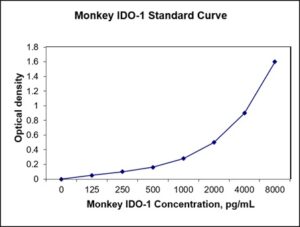
| Detection Range | 125-8000 pg/mL |
| Specificity | Monkey IDO-1 |
| Cross-Reactivity | < 0.5% cross-reactivity observed with available related molecules, < 50% cross-species reactivity observed with species tested. |
| Interference | No significant interference observed with available related molecules |
| Storage/Stability | 4 ºC for up to 6 months |
| Usage | For Laboratory Research Use Only. Not for diagnostic or therapeutic use. |
| Additional Notes | The kit allows for use in multiple experiments. |
Standard Curve
Kit Components
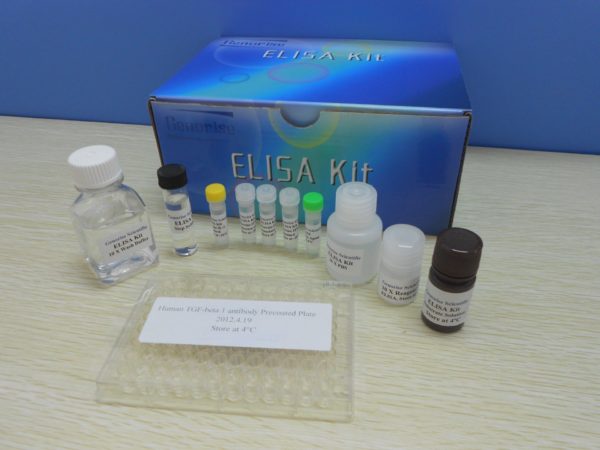
1. Pre-coated 96-well Microplate
2. Biotinylated Detection Antibody
3. Streptavidin-HRP Conjugate
4. Lyophilized Standards
5. TMB One-Step Substrate
6. Stop Solution
7. 20 x PBS
8. Assay Buffer
Other Materials Required but not Provided:
1. Microplate Reader capable of measuring absorption at 450 nm
2. Log-log graph paper or computer and software for ELISA data analysis
3. Precision pipettes (1-1000 µl)
4. Multi-channel pipettes (300 µl)
5. Distilled or deionized water
Protocol Outline
1. Prepare all reagents, samples and standards as instructed in the datasheet.
2. Add 100 µl of Standard or samples to each well and incubate 1 h at RT.
3. Add 100 µl of Working Detection Antibody to each well and incubate 1 h at RT.
4. Add 100 µl of Working Streptavidin-HRP to each well and incubate 20 min at RT.
5. Add 100 µl of Substrate to each well and incubate 5-30 min at RT.
6. Add 50 µl of Stop Solution to each well and read at 450 nm immediately.
Background:
Indoleamine-pyrrole 2,3-dioxygenase (IDO or INDO EC 1.13.11.52) is a heme-containing enzyme that is encoded by the IDO1 gene.[1] It is one of three enzymes that catalyze the first and rate-limiting step in the kynurenine pathway, the O2-dependent oxidation of L-tryptophan to N-formylkynurenine, the others being IDO2 and tryptophan 2,3-dioxygenase (TDO). IDO has been implicated in immune modulation through its ability to limit T-cell function and engage mechanisms of immune tolerance.[2] PGE2 can elevate the expression of IDO in CD11C+ dendritic cells and promotes the development of functional T-regulatory cells (Treg cells), which inhibit T-cell activity. IDO is an immune checkpoint molecule that it is an immunomodulatory enzyme produced by some alternatively activated macrophages and other immunoregulatory cells.[3] IDO is known to suppress T and NK cells, generate and activate Tregs and myeloid-derived suppressor cells, and promote the growth of new blood cells to feed the tumor.[4] IDO permits tumor cells to escape the immune system by depletion of L-tryptophan in the tumor microenvironment and by production of the catabolic product kynurenine, which selectively impairs the growth and survival of T-cells. A wide range of human cancers overexpress human IDO (hIDO).[5] Emerging evidence suggests that IDO becomes activated during tumor development, helping malignant cells escape eradication by the immune system.[2][4] In mice, IDO has a normal immune checkpoint function in immune tolerance in pregnancy, suppressing the mother’s immune system.[6] By 2018 the function of IDO as a checkpoint used by tumors to escape immune surveillance was a focus of research and drug discovery efforts,[5] as well as efforts to understand if it could be used as a biomarker for prognosis.[6] As of 2018, it appeared that overexpression of IDO in some tumors correlated with swifter death, while in kidney and liver cancers it appeared to correlate with better outcomes.[6]
References
1. Dai W and Gupta SL. (1990) Biochem. Biophys. Res. Commun. 168 (1), 1-8.
- Munn DH, Mellor AL (2013). Trends in Immunology. 34 (3): 137–43.
- Moon YW, Hajjar J, Hwu P, Naing A (2015). J Immunother Cancer. 3: 51.
- Prendergast GC, et al. (2014). Cancer Immunol Immunother. 63 (7): 721–35.
- Jiang T, et al. (2015). Future Medicinal Chemistry. 7 (2): 185–201.
- Yu CP, et al. (2018). Cellular Physiology and Biochemistry. 49 (1): 134–143.
Be the first to review “Nori Monkey IDO-1 ELISA Kit”
You must be logged in to post a review.
Reviews
There are no reviews yet.