
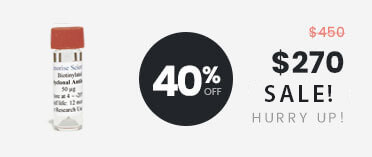




















Recombinant Canine IL-14A (TXLNA) Protein

Price range: $99.00 through $456.00
The recombinant canine IL-14A protein is derived from in vivo expression of canine TXLNA gene in E. coli and purified using his-tag affinity column and can be used in multiple applications such as cell culture, ELISA and western blot.
Alternative names for IL-14A: Interleukin 14 alpha, IL14A, TXLNA
This product is for Laboratory Research Use Only, not for diagnostic and therapeutic purposes or any other purposes.
- Description
- Product Citations
- Reviews (0)
Description
Genorise Recombinant Canine IL-14A (TXLNA) Summary
Alternative names for IL-14A: Interleukin 14 alpha, IL14A, TXLAN, alpha-taxilin
Alternative name for canine: Dog
Product Specifications
| Purity | > 95%, by SDSPAGE under reducing conditions and visualized by silver stain. |
| Endotoxin Level | na |
| Activity | na |
| Source | E. coli derived canine IL-14A. |
| Accession # | A0A8C0TC02 |
| N-Terminal Sequence Analysis | Gln |
| Amino Acid Sequence | Ala61-Ser187 |
| Predicted Molecular Mass | 14 kDa |
| SDS-PAGE | 26 kDa, reducing conditions |
Background:
Interleukin-14 alpha (IL-14A), also known as alpha-taxilin (encoded by the TXLNA gene) [1], is a high-molecular-weight B-cell growth factor (HMW-BCGF) that promotes the proliferation of normal and cancerous B-cells [2]. It is involved in immune responses and is implicated in the pathogenesis of autoimmune diseases like SLE and Sjogren’s syndrome. IL-14A induces B-cell proliferation, inhibits antibody secretion by inhibiting differentiation into antibody-secreting plasma cells, and expands selected B-cell subgroups. IL-14A is involved in Ca2+-dependent exocytosis in neuroendocrine cells [3]. This interleukin is produced mainly by T cells and certain malignant B cells. IL-14A has significant clinical value as a predictive biomarker and a key mediator in autoimmune disease pathogenesis. Serum levels of IL-14α can serve as a biomarker to monitor responses to immunotherapy in patients with advanced solid cancers. IL-14α is considered a putative biomarker for the stratification and diagnosis of Sjögren’s disease (SjD) and related dry eye conditions. Patients with primary and secondary Sjögren’s syndrome express significantly higher levels of IL-14α in their peripheral blood compared to healthy individuals. Elevated levels are found in aggressive B-cell non-Hodgkin’s lymphoma, Sjögren’s syndrome, and Systemic Lupus Erythematosus (SLE). Early changes in serum IL-14α levels (measured after two cycles of anti-PD-1 therapy like pembrolizumab) can predict patient survival and treatment response. While the precise nature of interleukin-14 remains under study, the alpha subunit has been identified as a critical factor in the development of B-cell-related disorders.
References
- Nogami S, et al. (2004). Biochem. Biophys. Res. Commun. 319 (3): 936–43.
- Ambrus JL, et al.(1993). Proc. Natl. Acad. Sci. U.S.A. 90 (13): 6330–4.
- Nogami S, et al. (2003). Genes Cells. 8 (1): 17–28.
Product Citations
Be the first to review “Recombinant Canine IL-14A (TXLNA) Protein”
You must be logged in to post a review.
Reviews
There are no reviews yet.